
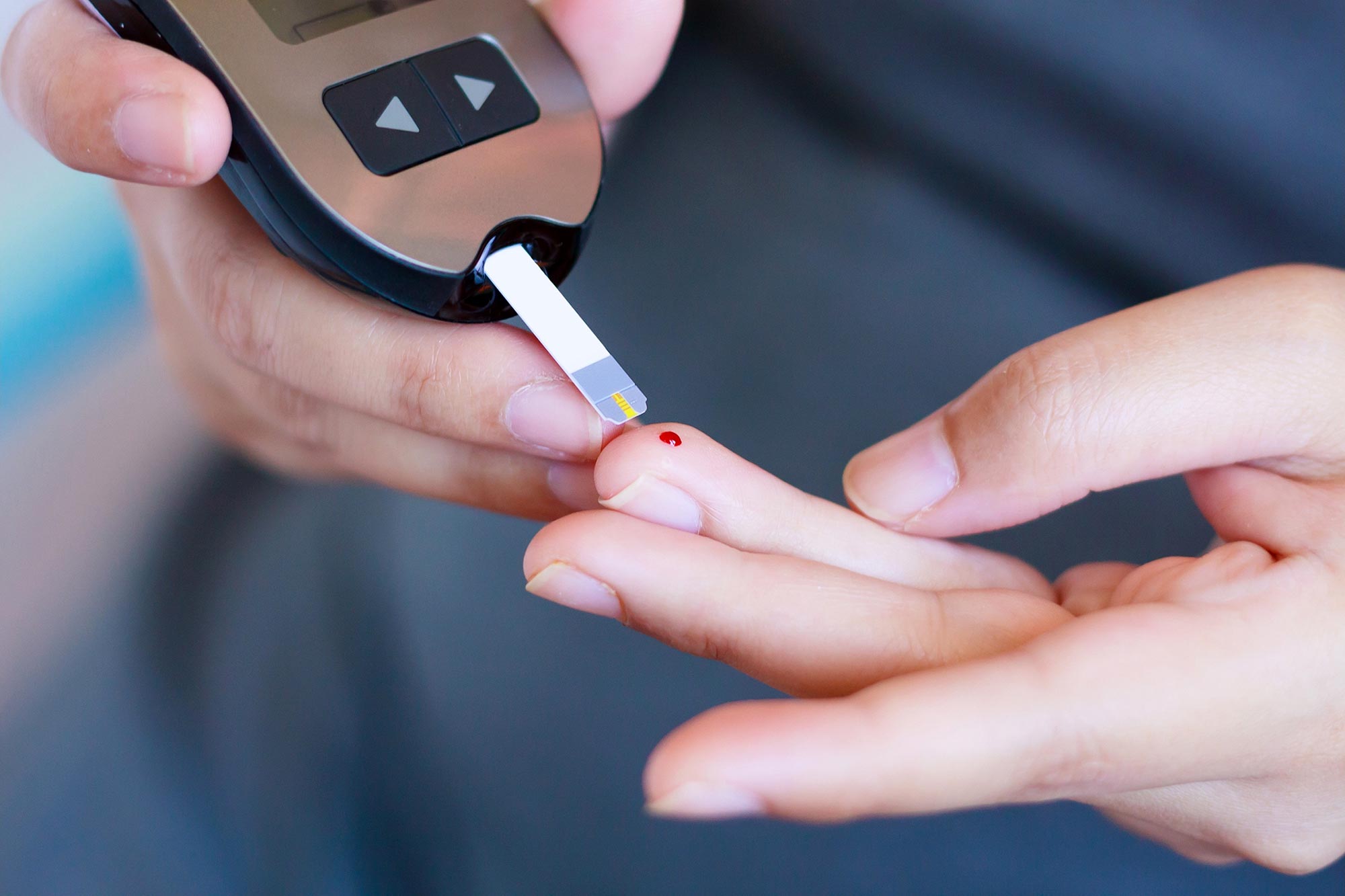
Shining a specific frequency of red light on a person’s back for 15 minutes can reduce blood sugar levels, according to a new study from City, University of London and UCL.
The researchers found that 670 nanometres (nm) of red light stimulated energy production within mitochondria, the tiny powerhouses within cells, leading to increased consumption of glucose. In particular, it led to a 27.7% reduction in blood glucose levels following glucose intake, and it reduced maximum glucose spiking by 7.5%.
While the study was conducted in healthy individuals, the non-invasive, non-pharmacological technique has the potential to have an impact on diabetes control after meals, as it can reduce damaging fluctuations of blood glucose in the body that contribute to aging.
Concerns About Blue Light Exposure
The study also highlights the significant long-term consequences for human health, including the potential dysregulation of blood sugars posed by lengthy exposure to blue light. Given the prominence of LED lighting and the fact that LEDs emit towards the blue end of the spectrum with very little red, the authors suggest that this may be a potential public health issue. The research has been published in the Journal of Biophotonics.
Mitochondria provide energy for vital cellular processes, using oxygen and glucose to produce the energy-rich nucleoside adenosine triphosphate (ATP). Previous research has established that long-wavelength light between approximately 650-900 nm (spanning the visible through to the near-infrared range) can increase mitochondrial production of ATP which reduces blood glucose and also improves health/lifespan in animals.
The authors Dr Michael Powner, Senior Lecturer in Neurobiology in the School of Health & Psychological Sciences at City, and Professor Glen Jeffery, Professor of Neuroscience in the UCL Institute of Ophthalmology, also say that this improvement in ATP production can cause signalling changes that are transmitted throughout the body.
They suggest that it may be mediating the abscopal effect, which refers to the phenomenon in cancer treatment where specific irradiation of a primary tumor can result in shrinkage of secondary tumors located in a different part of the body. Likewise, 670 nm light shone selectively on to the backs of mice in previous studies has been shown to result in improvements in ATP that improve symptoms in both a model of Parkinson’s disease and a model of diabetic retinopathy.
The Study’s Approach and Findings
To explore the impact of 670 nm red light on blood glucose, the researchers recruited 30 healthy participants, who were then randomized into two groups: 15 in the 670 nm red light group, and 15 in the placebo (no light) group. They had no known metabolic conditions and were not taking medication.
Participants were then asked to do an oral glucose tolerance test and record their blood glucose levels every 15 minutes over the next two hours. People who received red light exposure 45 minutes prior to drinking glucose exhibited a reduced peak blood glucose level and reduced total blood glucose during the two hours.
Dr Powner, who was the lead author of the study, said: “It is clear that light affects the way mitochondria function and this impacts our bodies at a cellular and physiological level. Our study has shown that we can use a single, 15-minute exposure to red light to reduce blood sugar levels after eating.
“While this has only been done in healthy individuals in this paper, it has the potential to impact diabetes control going forward, as it could help to reduce potentially damaging glucose spikes in the body after meals.”
Professor Jeffery said: “Sunlight has a balance between red and blue, but we now live in a world where blue light is dominant because although we do not see it, LED lights are dominant in blue and have almost no red in them. This reduces mitochondrial function and ATP production. Hence our internal environments are red-starved. Long-term exposure to blue light is potentially toxic without red. Blue light on its own impacts badly on physiology and can drive disrupted blood sugars that may in the long run contribute to diabetes and undermine health spans.
“Pre-1990, we all had incandescent lighting which was OK because it had the balance of blue and red similar to sunlight, but there is a potential health span time bomb in the change to LEDs in an aging population. This can partly be corrected by spending more time in sunlight.”
Reference: “Light stimulation of mitochondria reduces blood glucose levels” by Michael B. Powner and Glen Jeffery, 20 February 2024, Journal of Biophotonics.
DOI: 10.1002/jbio.202300521
The research was sponsored by Sight Research UK.
Never miss a breakthrough: Join the SciTechDaily newsletter.
Follow us on Google and Google News.
2 Comments
I just don’t believe it. Show us better evidence and double-blind testing.
Red LED’s @ 670nm are available everywhere. I have tonnes in my box of crazy intensity and a glucometer can be obtained easily from a drugstore. We can test this ourselves!